October 10, 2026

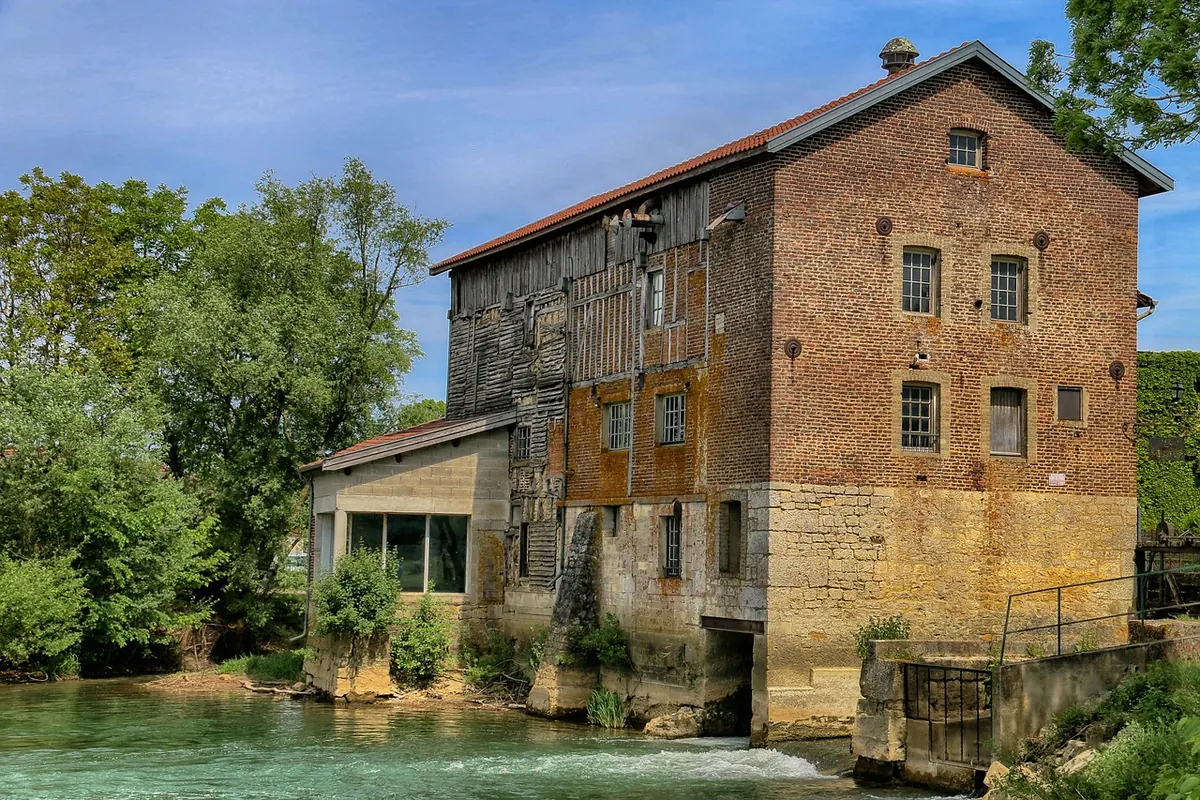
There is a particular kind of walk that follows water. The path shadows a millrace for a kilometre, crosses the stream on worn stone slabs, slips behind a stand of alders, and ends at a stone building with a wheel still bolted to its wall. Mill trails are some of the most satisfying half-days of hiking you can have, and they are also easy to get slightly wrong. The mistakes below come up again and again, and none of them are dramatic. Each one simply makes the day longer, wetter, or less pleasant than it needed to be.
Mistake One: Packing for a Summit on a Valley Walk
You see it at every trailhead near a mill: a walker with a 45-litre pack, a hydration bladder, three spare layers, a stove, and a folding stool, setting off on a nine-kilometre loop through a wooded valley. The opposite happens just as often — someone in trainers with a single small bottle of water and no rain jacket at all.
Mill trails are short on the map, which makes people either over-pack or under-pack. Over-packing costs you more than you think. These routes are often narrow: brambles on one side, a stone wall on the other, a low branch at head height. A wide, heavy pack catches on all of it and pushes your centre of gravity off balance exactly where you need it — on wet stone steps and muddy descents. Tired shoulders at hour three also make you careless with foot placement, and foot placement is everything on a damp valley path.
As a rough guideline, keep your pack well under a tenth to a seventh of your body weight on a route like this. You should be able to lift it with two fingers and forget you are wearing it.
What actually earns its place in the bag:
- Water — 1 to 1.5 litres per person for a half-day, more in heat. Valley streams look clean and are not safe to drink untreated.
- A light rain shell, even in a settled forecast. Mills sit where water is, and water means weather.
- A thin fleece or long-sleeve layer for shady stretches and the stop at the mill.
- Real food: bread, cheese, nuts, fruit. Something salty as well as sweet.
- An offline map on your phone plus a charged power bank — or a paper map of the valley.
- A small first-aid kit, a headlamp, sunscreen, and a plastic bag for anything wet.
- Trekking poles if you use them. On wet stone and timber, they are worth the weight.
Mistake Two: Treating Timing as an Afterthought
Mill trails run through valleys, and valleys behave differently from ridges. They are shaded, they hold moisture, and in wooded gorges the light goes early. A route that feels generous in the middle of the day can feel like a tunnel by late afternoon.
Two timing errors dominate. The first is starting at eleven in the morning in summer, which puts you on exposed stretches during the hottest hours and on the return leg when afternoon storms build. The second is planning by distance instead of time. Three kilometres an hour is realistic on rough, rooty, stream-crossed ground once you add photo stops, a look around the mill, and a few minutes of route-finding at each junction. Six kilometres of flat riverbank and six kilometres of mill trail are not the same walk.
Work backwards instead. Decide when you need to be back at the car, subtract the walking time, subtract an hour for the mill and lunch, and set your start from that. Give yourself a hard turnaround time and honour it even if you are close to the end of the loop.
One more thing worth checking before you go: if the mill you are walking to has published opening hours, confirm them. A locked door after two hours of climbing is a discouraging discovery.
Mistake Three: Losing the Markers and Not Noticing
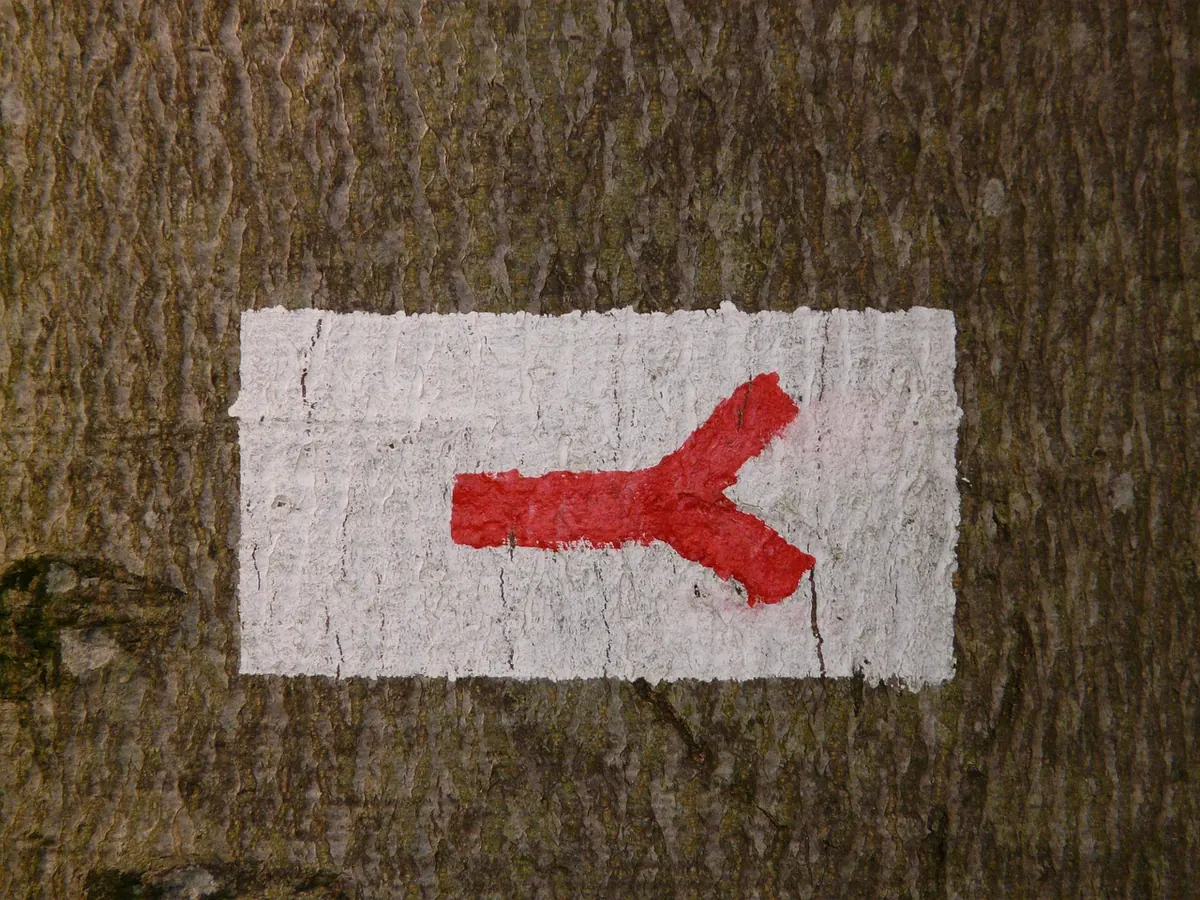
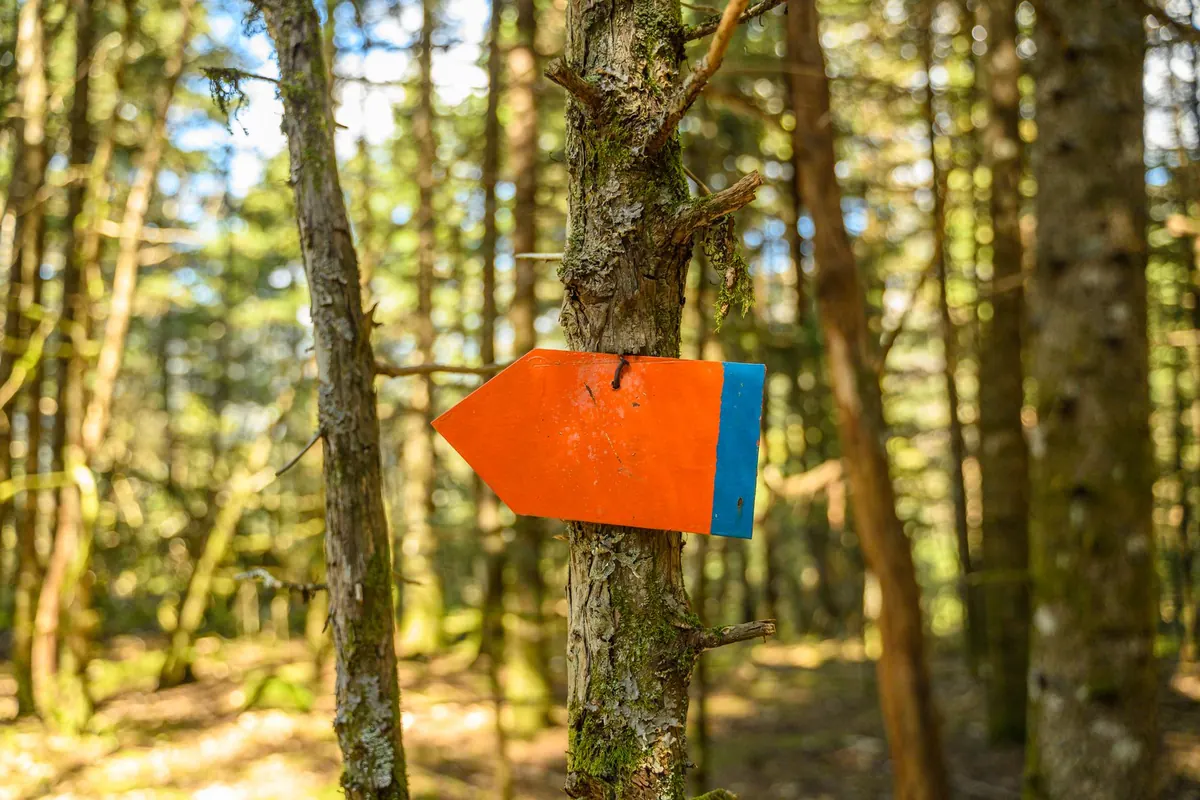
Mill routes have a habit of jumping between path types. One minute you are on a clear forest track with red-and-white blazes on the trees; the next you are crossing a farmyard, following a paved lane, and passing a mill house where nobody has repainted a marker in years.
First-timers usually lose the trail in one of two ways. They follow the prettiest line rather than the marked one — water takes the easiest route, not the route the trail takes. Or they stop looking behind them. A blaze painted for someone walking the other direction is easy to miss until you are three hundred metres up a side valley.
A few habits that prevent most of it:
- Note the trail number or name at the junction, not just the arrow.
- Turn around every few minutes and memorise what the route looks like from the other side.
- Scan at knee height as well as eye level. Blazes get painted on rocks and low walls.
- Count junctions. If you expected two and you have passed four, stop and check the map.
- If you have not seen a mark for five minutes on a turn-heavy stretch, walk back to the last one you are sure of. Backtracking a hundred metres is cheap; continuing on a wrong path is not.
On a mill trail, the wrong path almost always looks better than the right one. That is the trap.
Mistake Four: Winging the Stream Crossings
This is where first-timers get into real trouble. A mill trail crosses its stream repeatedly, often on mossy stones, worn planks, or a single log with a handrail that has seen better decades. After rain, the same crossing can be knee-deep and fast.
Treat every crossing as a decision, not a formality. Stop, look at both banks, and read the water. Wide, shallow, riffled sections are usually safer than narrow chutes. Anything above knee height, brown and pushy, or carrying branches is a no. Turn around and find the marked bridge upstream — mill trails almost always have one.
If you do cross:
- Release your pack's sternum strap and hip belt so you can shed the pack quickly if you go down.
- Keep three points of contact — two poles and one foot, or one pole and two feet.
- Step on dry rock, not on green algae. Green means slippery, always.
- Cross diagonally downstream, facing slightly into the current.
- Keep your boots on. Bare feet on cold, sharp, unseen riverbed is a worse idea than wet socks.
Mistake Five: New Boots, Cotton Socks, and Other Foot Trouble
Most mill-trail misery is foot misery, and most of it is avoidable. Wear boots or shoes you have already walked ten kilometres in. Cotton socks hold water against your skin and turn a small rub into a blister within an hour; wool or synthetic blends do not. Take the socks off at lunch, dry your feet, and change into a fresh pair if the route has been wet.
Stop at the first hint of a hot spot. A plaster now costs thirty seconds; a blister at kilometre eight costs you the last two hours and several days afterwards.
Mistake Six: Forgetting That a Working Valley Is Not a Theme Park
Mill trails pass through land that people live and work on: farmyards, orchards, fenced meadows, private gardens beside the race. Close every gate you open, keep well back from livestock and farm dogs, and do not climb on mill machinery, wheels, or ruined walls. Stonework beside water is often looser than it looks.
If a sign says a section is closed, believe it. Take the marked alternative and enjoy it.
Before You Set Off: A Five-Minute Check
Pack light enough to forget you are carrying it. Set a start time by working backwards from your return, and give yourself a turnaround hour. Download the map offline. Look at the forecast for rain in the previous twenty-four hours, because that is what decides whether the stream crossings are a hop or a problem. Tell someone where you are going and when you expect to be back.
Then walk slowly for the first twenty minutes and let the valley set the pace. Mill trails reward the person who arrives at the wheel house dry, unhurried, and still curious.
Photo: Joa70 / Pixabay