October 19, 2026
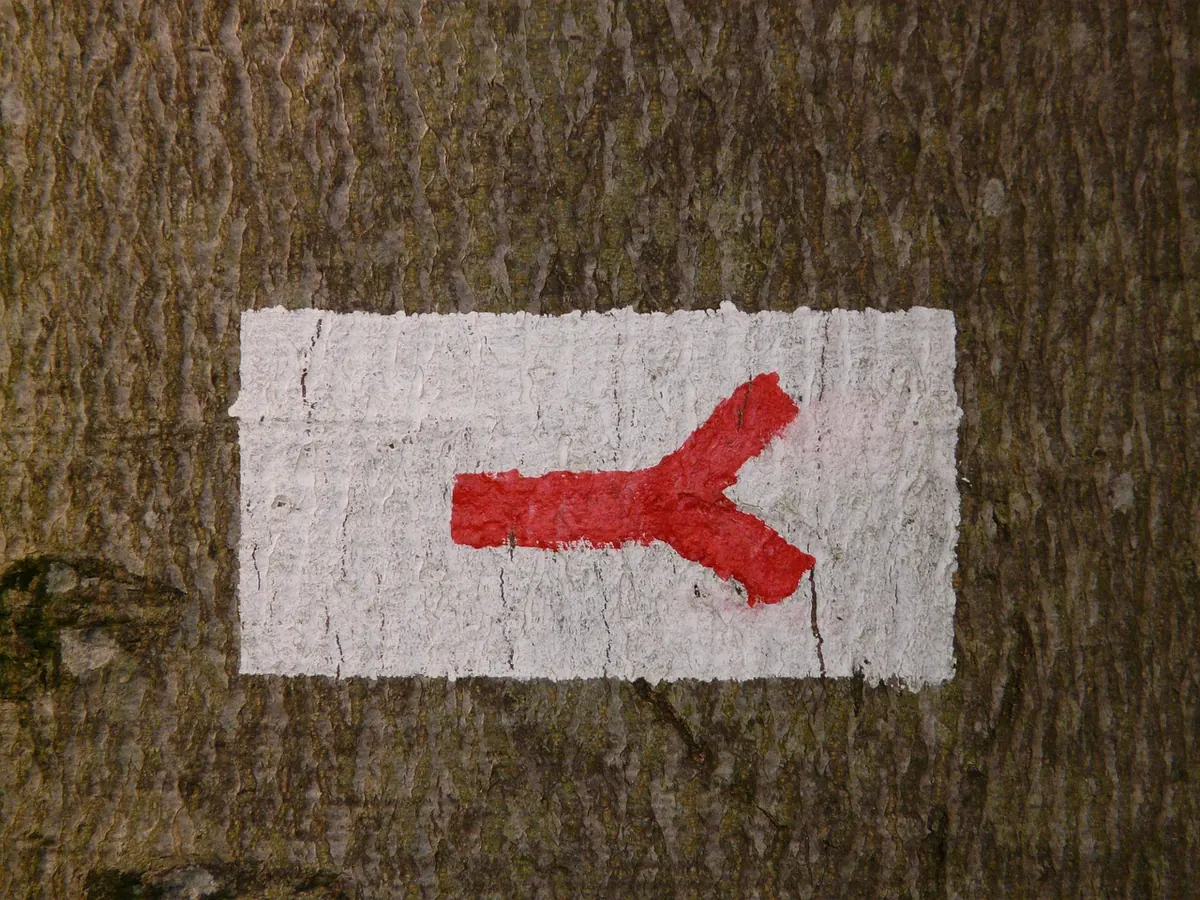
A path forks under a chestnut tree and two white bars with a red stripe point to the left. Thirty metres later the paint stops. This is the moment most walkers start guessing, and guessing is how an easy afternoon turns into a steep scramble through a bramble patch. Mill trails are usually well kept, but their markings carry a local dialect: paint codes, fingerposts in a language you may not read, and small plates naming a mill that stopped turning a century ago. Learn that dialect and the path stops being a puzzle.
What a paint blaze is actually saying
A blaze is not decoration. It is a confirmation, placed where the route changes direction or where a walker might reasonably hesitate. On most European mill and valley trails you will meet one of a handful of types.
- Two stacked bars in a colour pair, usually red and white. This is the standard long-distance waymark: the bars mean "you are on the route", not "turn here".
- An arrow or a chevron added to the bars, indicating the direction of travel where the path bends sharply or leaves a road.
- A single dab or dot on a rock, post or gate. Common on minor paths and short circular routes, cheap to maintain and easy to miss.
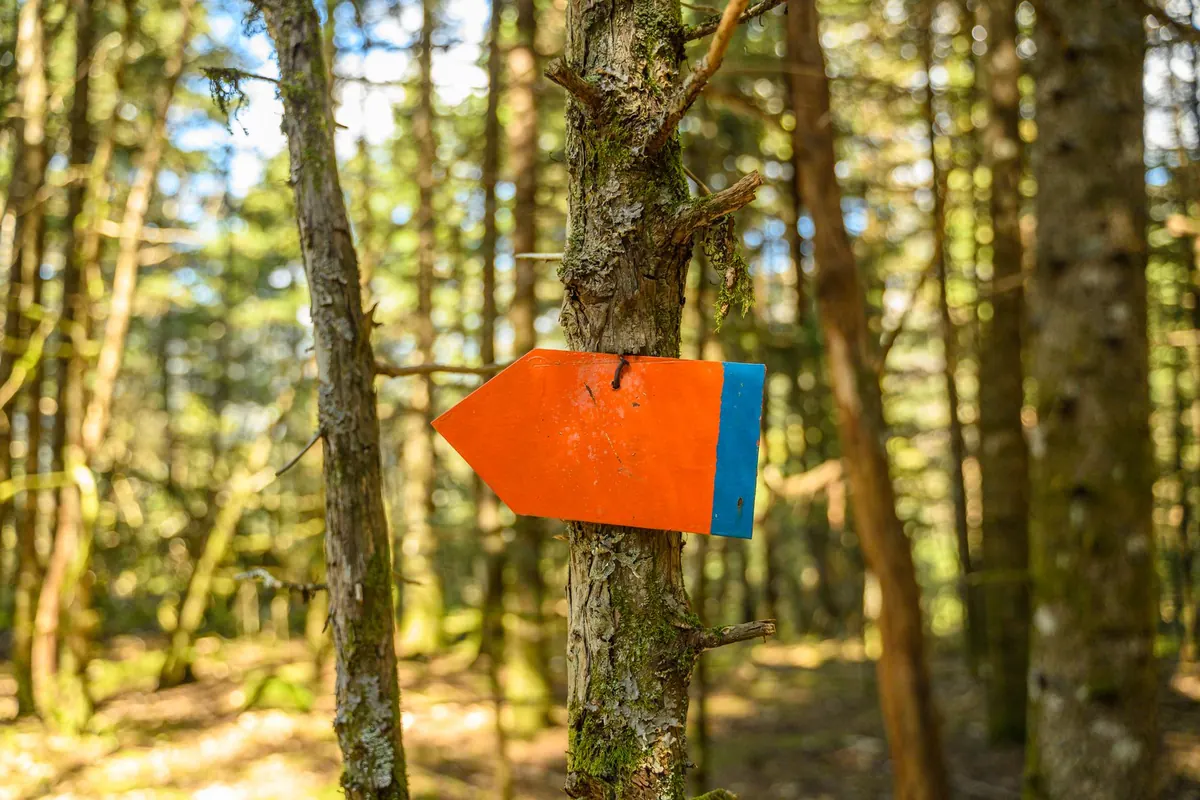
- Plastic or metal discs nailed to trunks, often numbered. The number is the trail number; the colour belongs to the local network.
- Cairns and stone piles above the treeline, where paint will not survive the winter.
Two habits make blazes dependable. First, look at two heights: many routes are painted at eye level for adults and again lower down, where children and dogs can see them and where snow sits less deep. Second, glance back over your shoulder every few minutes. Blazes are painted for both directions, but the reverse view often reveals a mark you walked straight past.
Paint fades. Lichen eats it. A mark that looks like a pale grey smudge may once have been a bright red bar, and old, ghostly blazes are still worth reading when the newer ones vanish.
Fingerposts: destination, time, number, difficulty
A wooden fingerpost is a small contract. Along the top it names the destination, sometimes with its altitude. Below that sits a walking time in hours and minutes. Beside it, a trail number or a letter. On many trails there is also a difficulty classification, often using a local letter code.
Read the time as one-way, for a steady adult with a light pack, on dry ground, without stops. It is a planning figure, not a promise. If you are walking with young children, carrying a heavy pack, photographing every millstone, or the path is wet and rooty, add a comfortable margin rather than assuming you are slower than everyone else. Nobody is.
Difficulty letters are worth learning before you set out, because they tell you what kind of path to expect: a walk on farm tracks and forest lanes, a proper hill path with some exposure, or a route needing hands, a head for heights and possibly a rope. Systems differ between countries and regions, so check the local key on the information board at the trailhead rather than applying a code from home.
Where a sign gives two times, one may be for a shorter variant or a different departure point. Look for the small print rather than the largest word. And if the fingerpost points down a driveway towards a farmhouse, it is usually routing you around a private yard, not through it.
Mill-site labels and what they tell you about the water
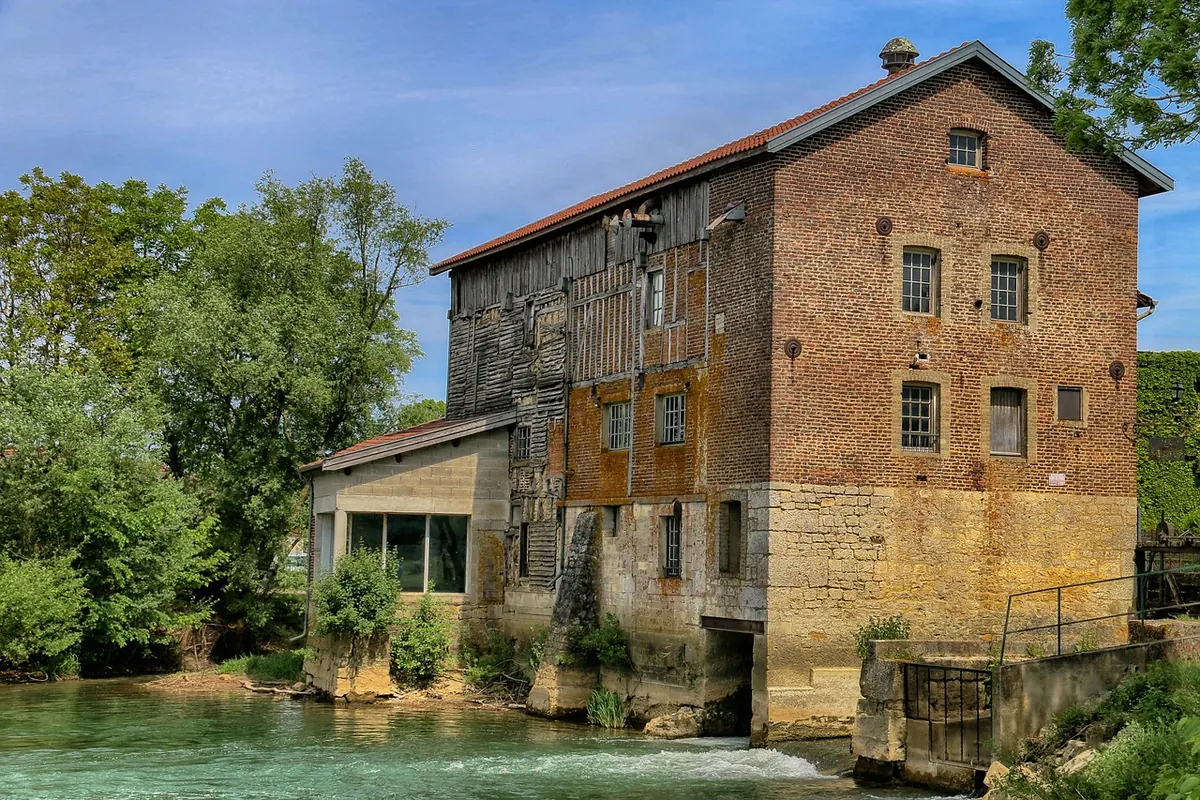
This is where mill trails reward attention. A plate reading "Mulino di San Rocco" or "ex mulino" is not just a name; it is a description of the terrain ahead. Mills were built where water could be diverted and dropped, which means a channel, a weir and a short, sharp slope.
Some labels you will meet, and what they imply:
- Molino / mulino — mill. Often a stone building with the wheel intact, sometimes a private house with a "proprietà privata" notice. Admire from the path.
- Gora or canale — the mill race, the artificial channel that carried water to the wheel. Trails often run along its bank, which is flat and easy but narrow.
- Chiusa, diga or traversa — weir or sluice gate. Expect a small dam and wet, polished stones at the crossing.
- Macina — millstone. Occasionally the plate marks where a broken stone was left, or where one was quarried.
- Bivio — junction. On many rural trails this single word is the most useful thing on the post.
A label mentioning a mill upstream of you usually means the path will follow water uphill; downstream means a gentle descent beside the race. If the sign says the crossing is on the channel itself, take it seriously and expect slippery footing.
How to read a junction in six steps
- Stop before the fork, not on top of it. Junctions lose paint and gain boot scuffs.
- Find the confirmation blaze on your side of the junction, the one that brought you here. It tells you the route continued this far.
- Check that the number or colour on the fingerpost matches the blaze you have been following. Networks overlap, and a confident arrow may belong to a different route.
- Look five to ten metres up each branch. The correct path is nearly always marked again quickly. An unmarked branch that stays unmarked is a strong signal.
- Note the time and take a photograph of the post. It costs nothing and settles later arguments.
- If no mark appears within a few minutes of walking a branch, return to the junction rather than pushing on in hope.
When the markings are missing, faint or contradictory
It happens on the best-maintained trails: a fallen branch hides a blaze, a storm takes out a sign, a new forestry track cuts through an old line, or a local enthusiast paints arrows in a colour the official route does not use.
Work backwards first. Retrace to the last mark you are certain of and search outward from there rather than wandering forward. Then look for the marks that outlast paint: axe blazes on old beeches, wire fencing following a boundary, a worn tread of packed earth, a line of stones edging a path across open ground. Read the terrain too. Mill trails and valley routes tend to stay within sight or sound of water, and a path that suddenly climbs away from a stream for no reason deserves a second look.
If you are carrying a map or a GPS track, use it to confirm what the ground is showing you, not to override it. Digital tracks are sometimes drawn on old data, and a path on a screen can be a wall of brambles in life. When the group disagrees, decide at the junction, together, and set a turnaround time before you continue. Splitting up to "just check" is how a small uncertainty becomes a Search and Rescue call-out.
A mark you cannot find is information, not failure. It usually means you are standing ten metres past the turn.
A short routine before you walk
Before you leave the trailhead, photograph the information board. Note the blaze colour and the trail number you will follow, and pick out the two or three junctions where you might go wrong. Learn two local words for "mill" and "junction" and you will read half the signs on the route.
Then walk with your eyes slightly ahead rather than down at your boots. Blazes are placed for people who are looking. A glance at the next bend, a look back at each turn, and a habit of pausing at forks will keep you on the path to the mill and, just as importantly, back again.
Photo: Kostas Dimopoulos / Pexels